Against a backdrop of continued complexity in the global and regional economies, the maritime industry is facing mounting pressure from geopolitical volatility, intensifying competition, and the need to reform the governance model of state-owned enterprises. The Party Committee of Vietnam Maritime Corporation (VIMC) continues to affirm its role as the political nucleus, leading the entire system through challenges, sustaining growth momentum, and laying the foundation for a new phase of development.
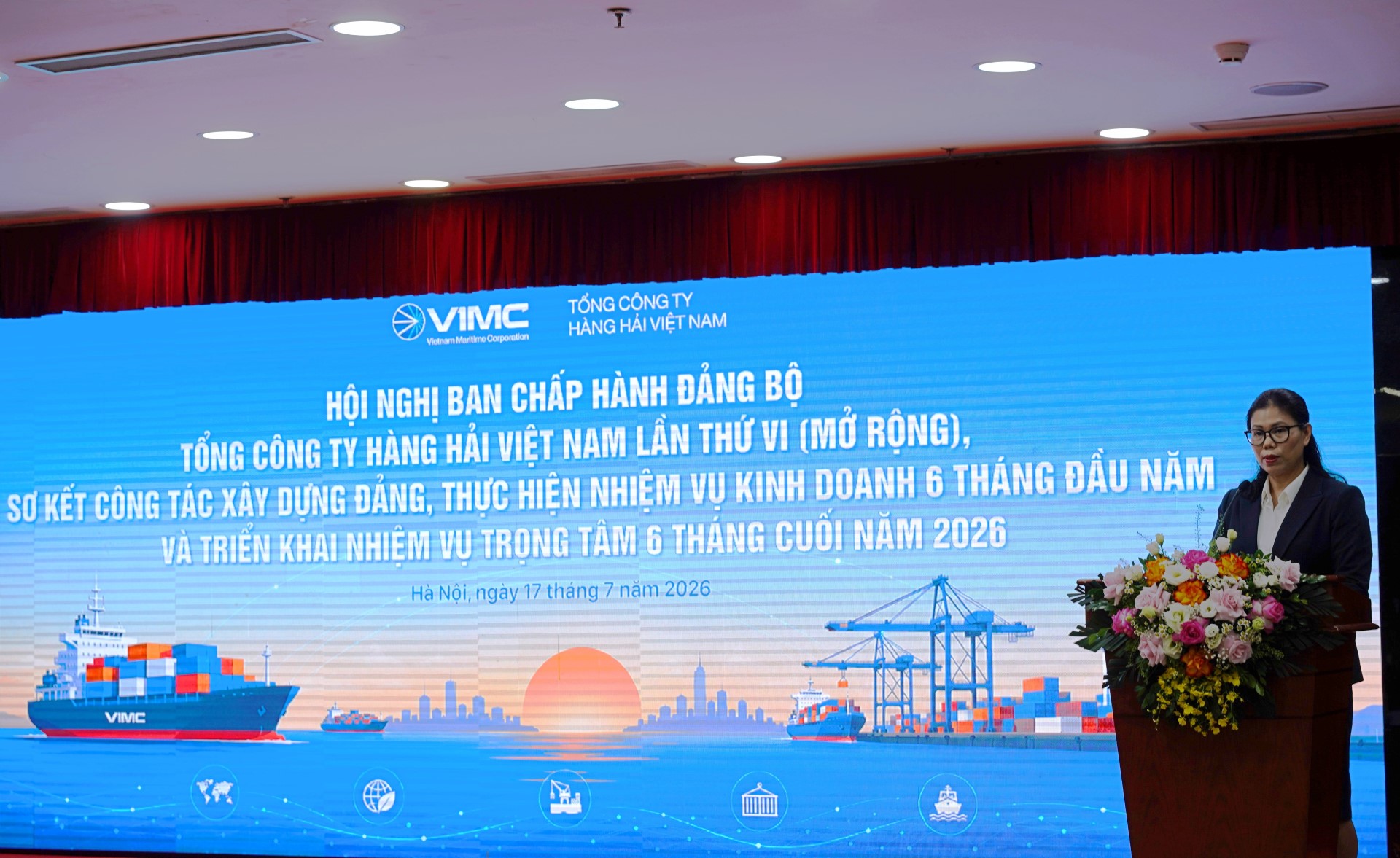
On July 17, VIMC held the 6th (expanded) Conference of the Executive Committee of the VIMC Party Committee to review Party-building activities, assess production and business performance in the first half of the year, and set out key tasks for the second half of 2026.
The report presented at the conference showed that VIMC’s operations in the first half of 2026 took place against a backdrop of continued uncertainty in the global and regional maritime and logistics markets. Competition in the shipping market intensified, while the need to improve governance efficiency and competitiveness became increasingly pronounced.
Against this backdrop, the VIMC Party Committee focused on providing comprehensive leadership and direction for both Party-building activities and production and business operations. The Board of Directors, Executive Management and member companies proactively implemented operational solutions, helping maintain stable operations across the system and achieve a number of positive results.
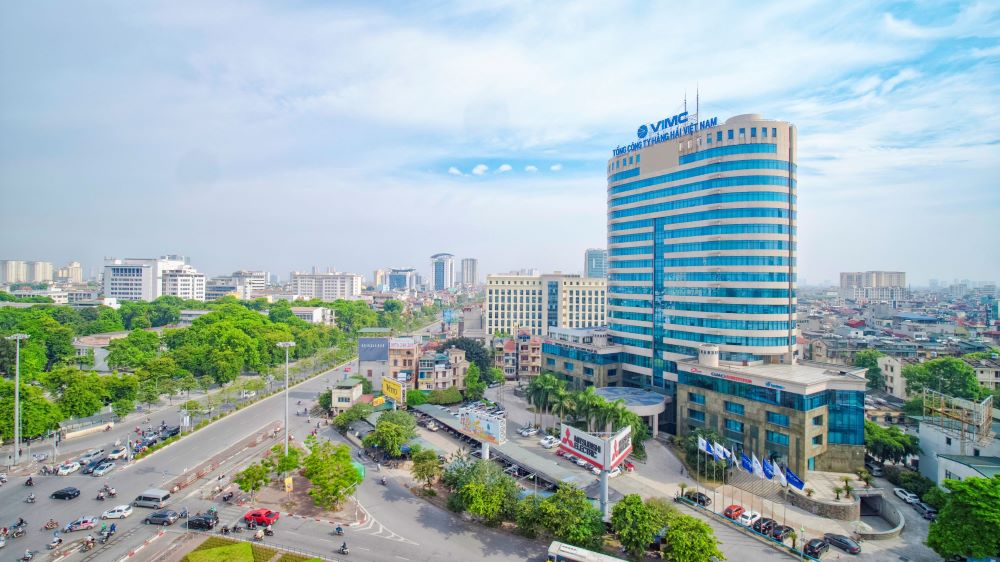
According to the report, VIMC’s consolidated revenue reached VND 13.483 trillion, equivalent to 61% of the full-year target. Consolidated profit reached VND 2.543 trillion, representing 79% of the 2026 full-year target.
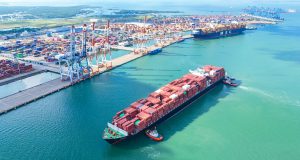
Port operations and shipping activities remained stable. Cargo throughput across the port system reached 89.82 million tonnes, equivalent to 50% of the annual target, while maritime transport volume reached 12.67 million tonnes, achieving 53% of the 2026 target.
Many VIMC member companies maintained their growth momentum and improved operational efficiency, making positive contributions to the Corporation’s overall performance.
These results provide a foundation for VIMC to continue implementing its key tasks in the remaining months of the year, with the aim of achieving the targets set out in its annual plan.
Alongside its business performance, the VIMC Party Committee continued to implement Party-building activities comprehensively across the political, ideological, organizational, inspection, supervision and mass-mobilization fronts. The political leadership role of Party organizations was further strengthened, contributing to greater discipline, stronger internal unity and improved leadership effectiveness in carrying out political tasks.
Alongside the achievements, the conference also openly identified a number of shortcomings and outstanding issues. Some business targets remain under significant pressure; the implementation of certain tasks has been slow; management capabilities and coordination efficiency among some units have yet to meet requirements; and bottlenecks remain to be addressed in order to create additional room for growth in the coming period.
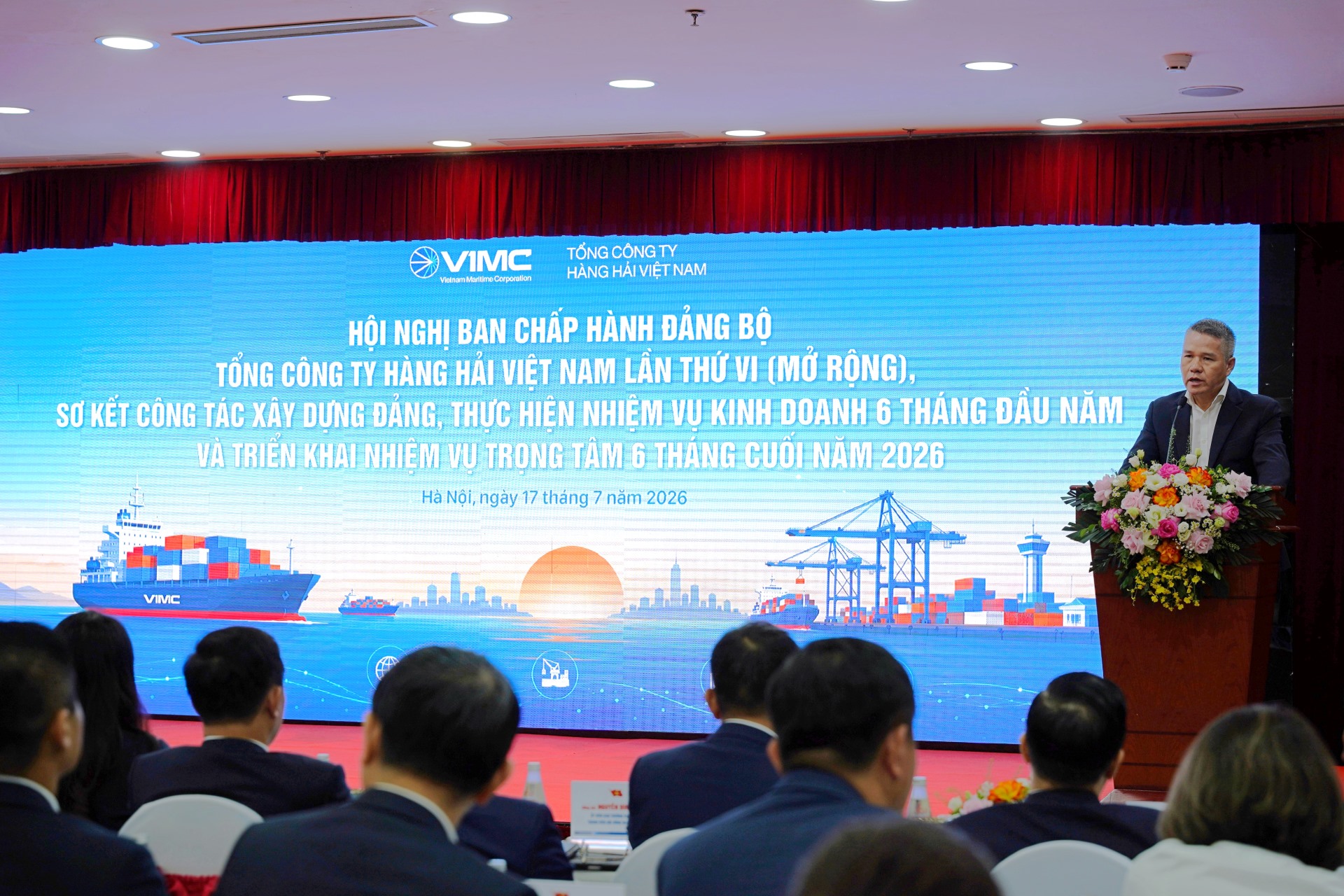
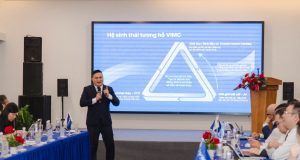
Speaking at the conference, Nguyen Canh Tinh, Secretary of the VIMC Party Committee and Chairman of the Board of Directors, emphasized that the tasks for the second half of the year are not limited to achieving planned targets, but must also deliver tangible improvements in governance quality and management practices. He said that every Party committee and every leadership official must take greater initiative, act more decisively, and have the courage to think, act and take responsibility for the Corporation’s common interests.
The VIMC Party Committee called for continued efforts to strengthen the leadership capacity and organizational strength of Party committees at all levels; review and improve coordination regulations between the Party Committee, the Board of Directors and the Board of General Directors; consolidate Party organizations under the new organizational model; and strengthen coordination with local Party committees in areas where member companies operate in order to resolve difficulties related to infrastructure, logistics and security in port areas, while facilitating production and business activities.
In particular, VIMC’s leadership called on the entire system to make a decisive shift from experience-based management to data-, target- and results-based management; implement KPI systems, management dashboards and alert mechanisms to accelerate decision-making, clearly assign accountability to individual employees and units, and improve coordination across the system. This is regarded as an important step toward strengthening VIMC’s competitiveness as the maritime industry enters a period of profound transformation.
Alongside governance reform, the VIMC Party Committee also instructed the Board of Directors and Executive Management to review all business scenarios, accelerate key investment projects, develop the fleet, expand market share and strive to achieve double-digit growth in 2026. Inspection and supervision activities will continue to be strengthened to ensure effective risk management, preserve and grow state capital, and build a professional, disciplined and efficient working culture.
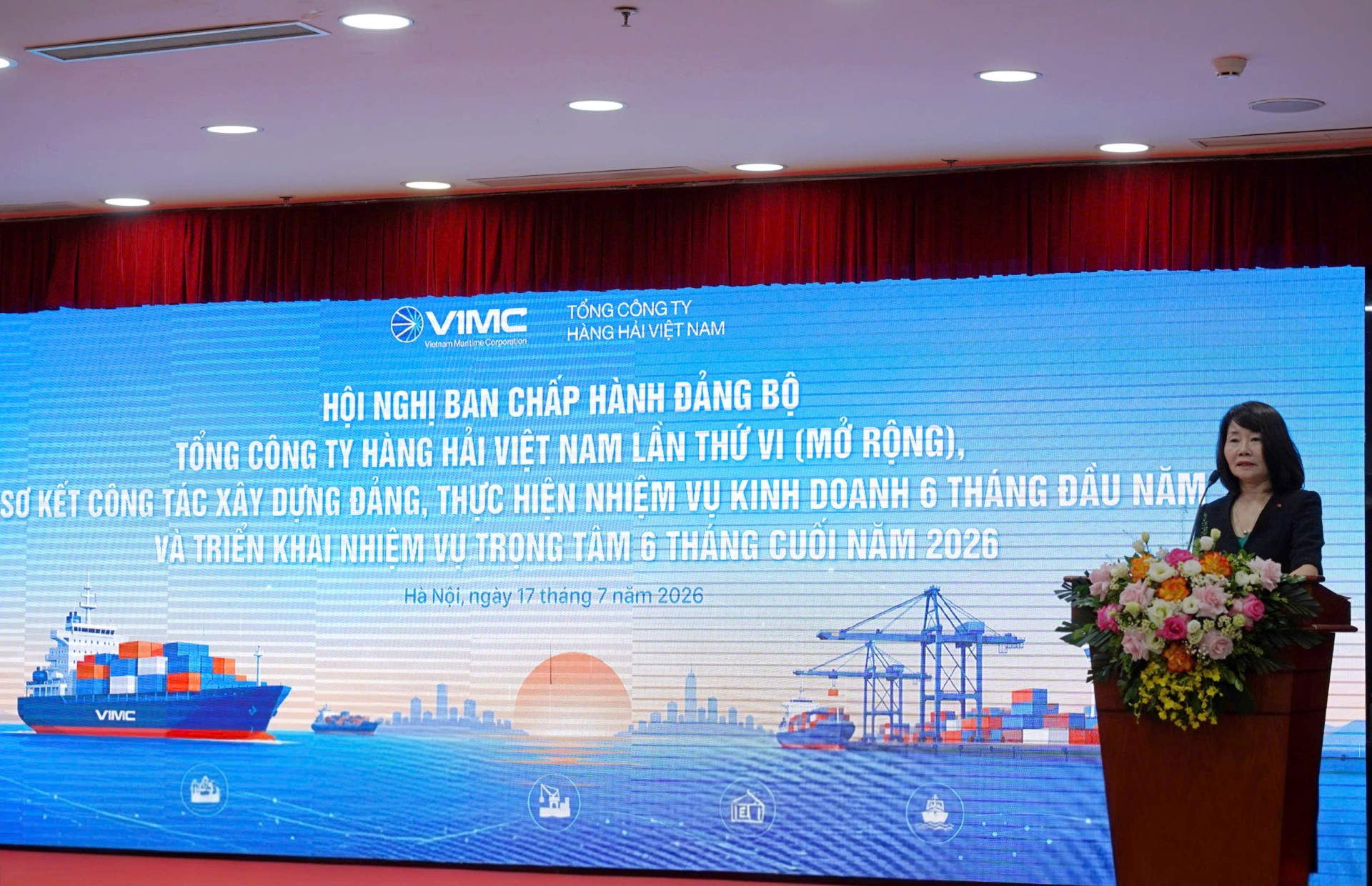
Speaking at the conference, Nguyen Thi Thu Lan, Full-time Deputy Secretary of the Party Committee of the Ministry of Finance, acknowledged the achievements made by the VIMC Party Committee in Party-building activities and production and business operations during the first half of the year. She said these results provide an important foundation for the Corporation to continue carrying out its tasks in the period ahead, while noting that the workload for the second half of the year remains substantial and will require greater determination and more decisive action across the entire system.
The Full-time Deputy Secretary of the Party Committee of the Ministry of Finance called on VIMC to focus on implementing strategic projects, including the Can Gio International Transshipment Port, logistics centers, ICDs and fleet investment projects. She also urged the Corporation to accelerate digital transformation and apply big data, artificial intelligence and other emerging technologies to corporate governance, port operations and shipping in order to improve productivity, governance quality and business efficiency. In addition, VIMC should continue developing a high-quality management workforce, strengthen inspection and supervision, step up efforts to prevent corruption and waste, and further improve the material and spiritual well-being of its employees.
At the conclusion of the conference, the Executive Committee of the VIMC Party Committee agreed on key priorities for the second half of 2026. These include strengthening the leadership capacity of Party committees at all levels, reforming corporate governance, accelerating key investment projects, improving the operational efficiency of ports, shipping and logistics, and strengthening inspection and supervision while building a clean, strong and effective political system.